Elopement Suits: Your Complete Guide to Fit, Fabric + Where to Shop for Elopement Attire

If you do a quick search, you’ll easily find tons of resources for wedding and elopement dresses online (we’ve even got our own guide here)—but, for those who are planning to wear a suit, tux or tailored outfit—specifically for adventure elopements—there isn’t as much information to be found.
So we’re here to help.
If you are eloping, your attire needs to do more than just look good for photos. It needs to support the kind of experience you want to have—whether that’s bouldering up a mountain, strolling through a forest, or jumping across riverbeds.
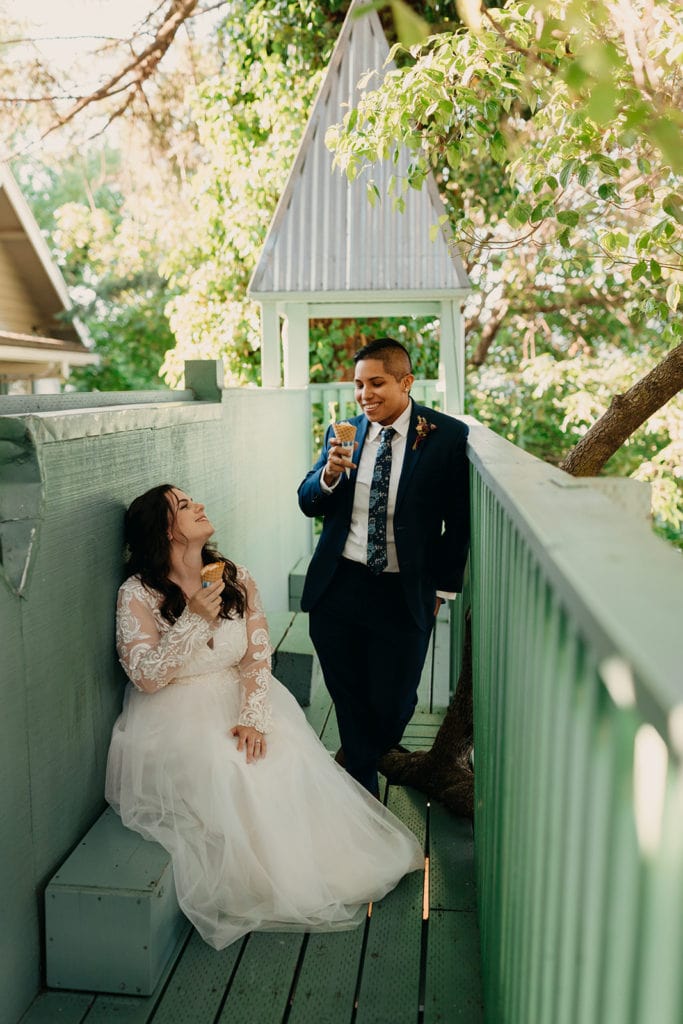
Whether you identify as a groom, man, masc-presenting, nonbinary, or simply feel most like yourself in a suit, this guide to elopement suits is for you.
In this guide, we’ll be sharing information on how to choose the right fabric for your climate, how to tailor your elopement suit for the kind of experience you’re planning, where and when to shop, and a few elopement suit ideas we’ve seen and loved. By the end of this guide, we hope you will have a better understanding of what kind of elopement suits work best for outdoor elopements. But more than that, we hope that no matter what you choose to wear, you’ll feel more inspired to choose elopement attire that makes you feel and look your best!

Quick Summary: How to Choose the Perfect Suit for an Elopement
Before we dive into all the details, here are a few things we recommend keeping in mind when choosing an elopement suit:
- Choose fabric based on weather first, aesthetics second
- Best all-around fabrics: wool blends or mid-weight wool
- Best for warm weather: linen, cotton blends, lightweight wool
- Best for cold weather: wool, flannel, tweed, velvet
- Prioritize fit, comfort, and mobility over traditional formalwear rules
- Pick colors that complement your environment—not ones that blend in
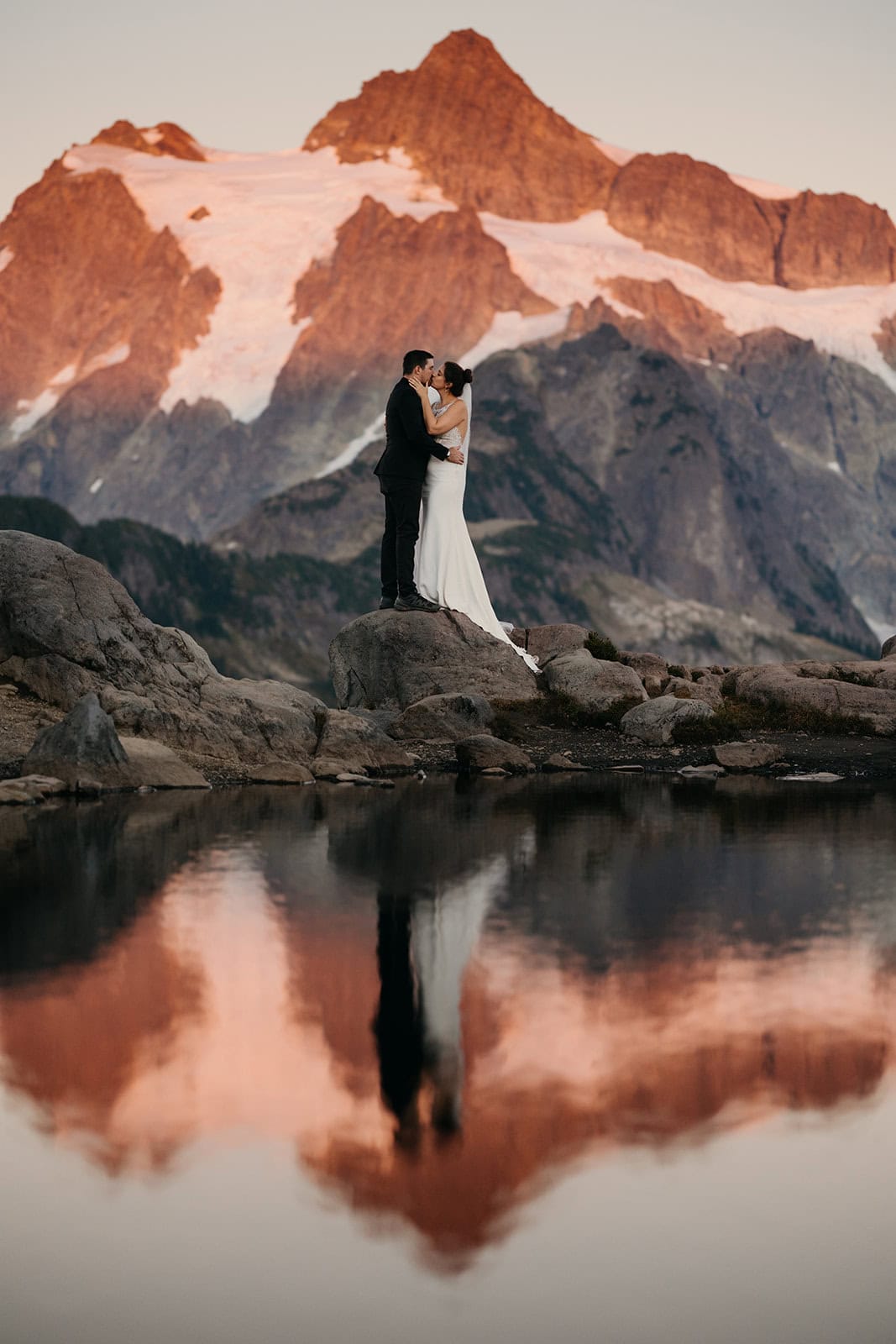
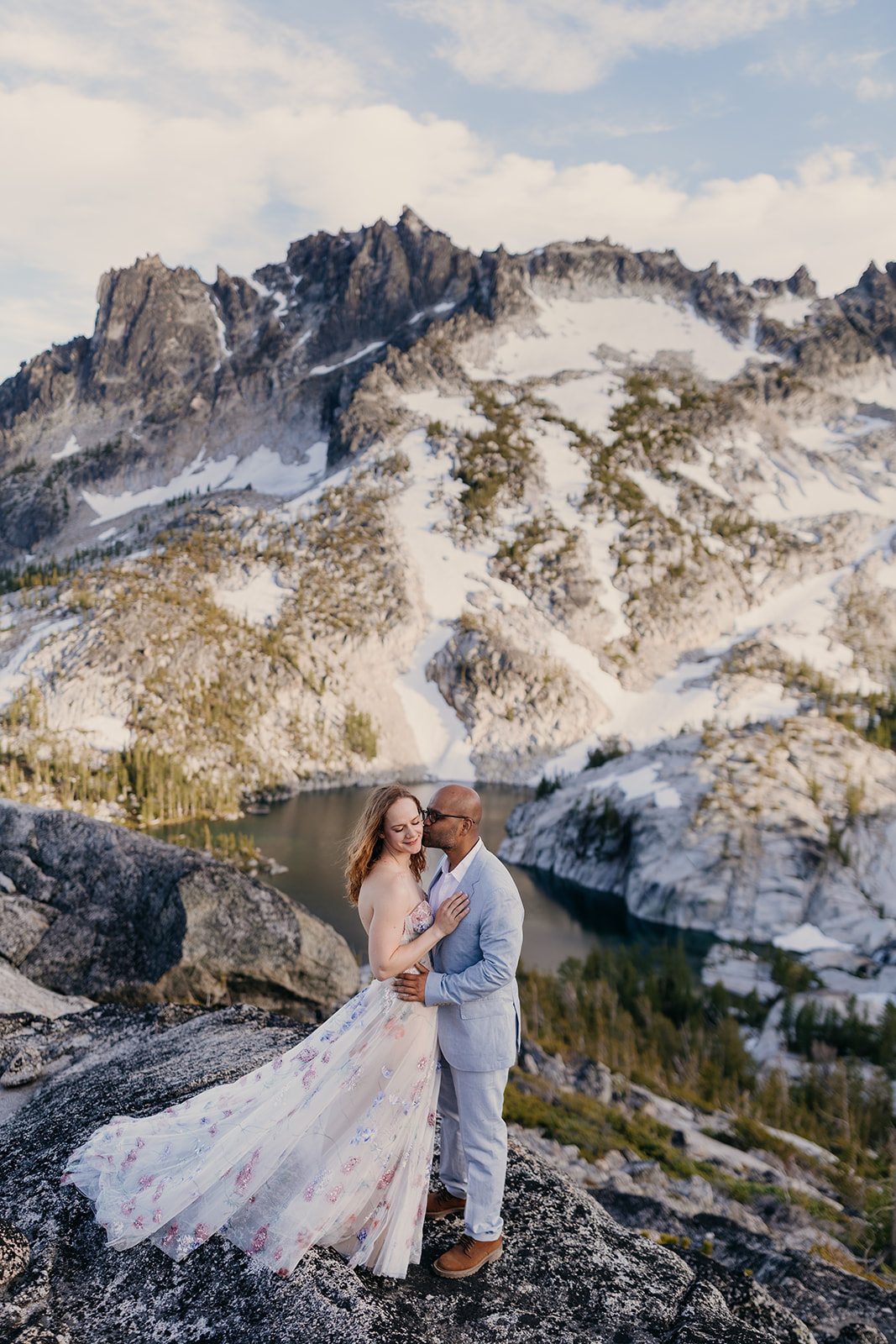
- Best for mountains: Black, blue tones, burgundy
- Best for deserts: Green, olive, cream
- Best for the coast: Burgundy, light blue, pinks,
- Best for forest/rain: Burgundy, black, warm neutrals
- Order at least 3-6 months before your elopement to allow time for tailoring
- Test your full outfit (shoes included) before your elopement day


What Is the Difference between Elopement Suits + Traditional Wedding Suits?
Wedding suits and elopement suits are not one and the same.
Traditional wedding attire is usually designed for controlled environments like indoor venues, flat surfaces, minimal walking, and predictable temperatures.
Adventure elopements, on the other hand, have a lot of varying factors. Your suit may need to handle wind, dirt, rain, sand, snow, humidity, travel, hiking, scrambling over rocks, layering for sunrise, or sitting in a car for several hours between locations.
Traditional wedding suits look great, but that doesn’t mean they’re designed for the type of movement you’ll be doing during your elopement day and choosing one could cause issues like:
- Fabrics that trap heat
- Super slim cuts that restrict movement
- Dress shoes that don’t allow for good traction
- Pants hems dragging through mud or sand
- Fabrics that wrinkle during travel
A good elopement suit shouldn’t do any of that. Instead, it should support your experience—not distract from it.
If your waistband is digging in halfway through your hike, or your jacket feels too tight to lift your arms, or you’re freezing because there wasn’t enough room to layer underneath, those are all things that can pull you out of your experience.
This is why finding a good elopement suit fit is so important. Your elopement attire should allow you to be able to move, breathe, sit, climb, layer up, and stay fully present with your partner—while, of course, feeling like a million bucks.

How to Choose the Right Fabric for Your Elopement Suit
Your fabric choice is one of the most important decisions you can make when choosing your elopement suit. The fabric impacts how warm or cool you stay, how your suit moves, how easily it wrinkles, and how it photographs outdoors. A beautiful suit that leaves you sweating, freezing, or uncomfortable won’t do you (or your photos) any favors.
When it comes to choosing an elopement suit, we recommend choosing fabric based on your location’s weather first, then the aesthetics second.
Best suit fabrics for hot weather elopements
If you’re eloping somewhere warm—like the desert or during the summer months—choose a suit fabric that is lightweight and allows for breathability. Here are our top pick
|
Linen Best for: beach, desert, and warm-weather destinations |
Cotton Blends Best for: warmer climates |
Lightweight Wool Best for: polished warm-weather looks |
|
|
Pros |
|
|
|
|
Cons |
|
|
|


Best suit fabrics for cold-weather elopements
If you’re planning a winter, mountain, or sunrise elopement, focus on fabrics that will keep you warm.
|
Wool |
Flannel |
Tweed |
Velvet Accents |
|
|
Features |
|
|
|
Pro Tip: Just bring a lint roller if you opt for a velvet suit. |
Best all-season suit fabrics
If your elopement takes place during a shoulder season (not too hot, not too cold), or your location has unpredictable weather, or you simply want more options and flexibility, here are the fabrics we recommend:
- Midweight wool
- Performance blends
- Stretch fabrics with wrinkle resistance
The good thing about these types of fabrics is that they tend to travel and photograph well as they don’t wrinkle quite as much.


How Should an Elopement Suit Fit?
Prioritize Comfort and Flexibility
First things first, your elopement suit should feel comfortable. We know “comfort” might not be the first thing you think of when you think about wearing a suit, but it’s absolutely possible to achieve.
If your elopement includes hiking or more strenuous adventures, test your range of motion during your suit fitting. Can you:
- Sit comfortably?
- Lunge?
- Step up onto a rock?
- Raise your arms?
If not, your suit will likely need adjusting. Because while ripped pants may make for a memorable story, it’s probably not the one you’re aiming for.
Allow Space for Layers (if Eloping in Cooler Weather)
If your elopement is taking place in cooler weather or at sunrise, you may need to layer up. For suit wearers, this often means having a layer of thermals or long johns underneath.
When getting your elopement suit fitted, bring those extra layers with you and wear them underneath so your tailor can properly fit your suit without it looking too bulky.
Should you hike in your suit?
You can. But you definitely don’t have to.
A lot of our couples choose to hike in activewear and keep their wedding attire in a garment bag. Then, once we arrive at their location, they change into their elopement attire on the trail.
This tends to work really well for longer hikes, hot or rainy weather, or trails that are especially muddy. Hiking in more casual clothes can also help keep your suit from getting wrinkled on the way up. So, the short answer? Yes, your suit in a garment bag is just fine.
And if wearing a traditional two or three piece suit isn’t your thing, that’s totally fine too. We have lots of grooms who opt for pants and suspenders, and they always look great!

How to Choose an Elopement Suit Color That Coordinates (Not Blends) With Your Landscape
Ok, we’ve talked about elopement suit fabric and fit—now let’s talk about suit colors! There is a lot we can say about suit colors, but suffice it to say that you can have as much fun here as you want! Want to wear a pink suit? Go for it (we will be the first to tell you how amazing it looks!). Your elopement is already non traditional, so why not let your suit be too?
Pick a color that compliments your chosen landscape
This is our biggest tip for choosing your elopement suit color. You might have to get out your color wheel, but the key here is to choose a suit color that is opposite of your landscape color.
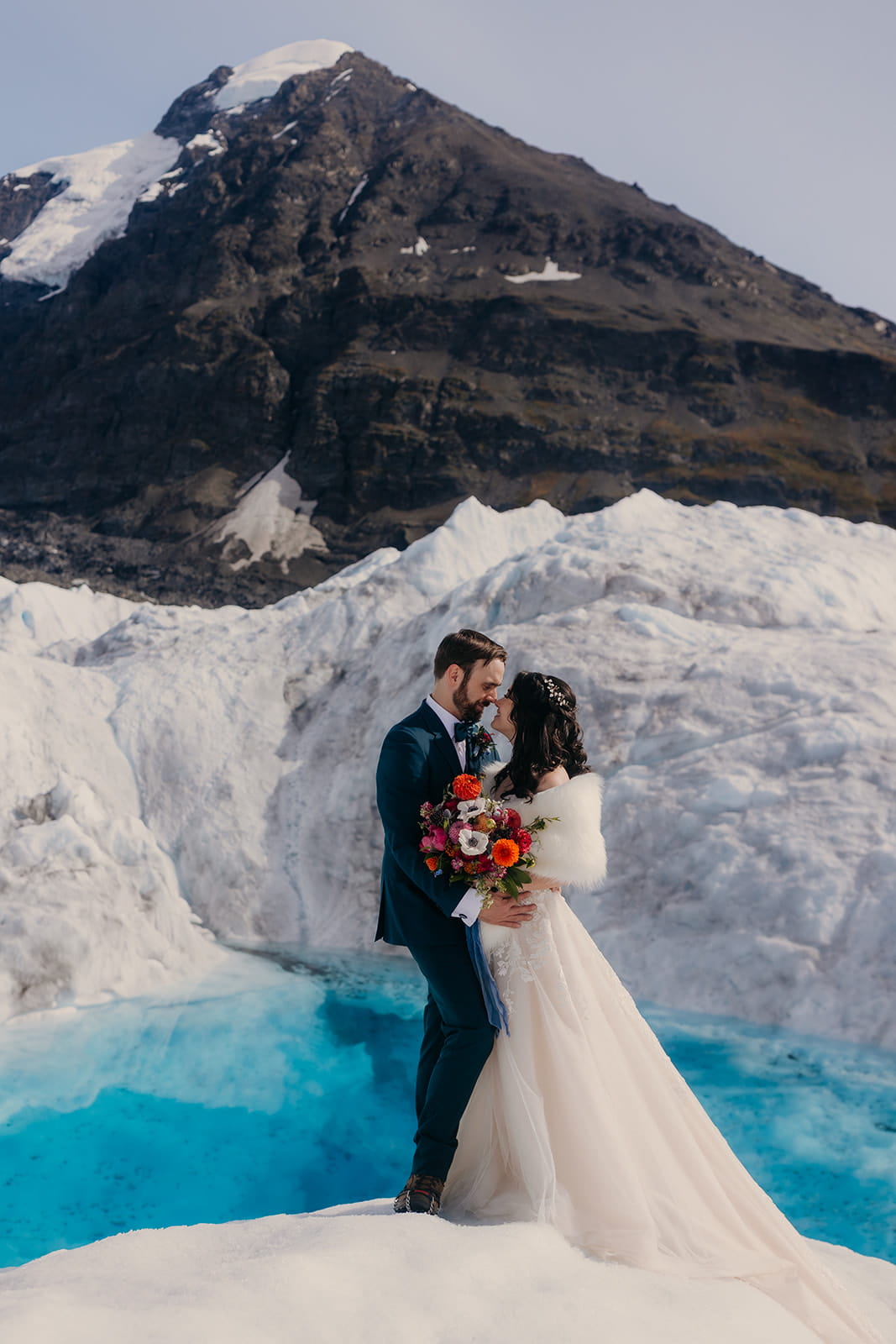
For example, if you are eloping in the forest and your backdrop primarily consists of the color green, you may want to go with a burgundy suit (red is opposite of green on the color wheel). Or, if you’re eloping in the desert, a blue suit can really pop.
This isn’t a hard and fast rule, but it is a good general rule of thumb that can quickly help you choose a starting color for your suit so you don’t end up blending into the landscape behind you.
For quick reference, we’ve broken down a few suit colors that tend to look best in each landscape.
Mountains:
Best Colors:
- Navy
- Black
- Burgundy
- Light blue
- Cream
- Charcoal
Avoid: Gray, Green
Desert:
Best Colors:
- Green
- Olive
- Cream
Avoid: Red, Orange
Beach/Coast:
Best Colors:
- Navy
- Light blue
- Burgundy
- Cream
Avoid: Gray
Forest:
Best Colors:
- Burgundy
- Navy
- Black
- Rust
- Light blue
Avoid: Green
Pro Tip: While you can wear any color you want for your elopement, we typically recommend avoiding the color gray as it can easily blend into cloudy skies, coastlines, and mountain scenery (aka – most adventure elopement landscapes). Green is also a tricky color, unless you’re eloping in the desert as it tends to blend into forests and most PNW landscapes.


Be Aware that Online Photos Don’t Always Look the Same in Real Life
One of the hardest things about shopping for a suit online (more on that later) is that the color you see on the screen may not be totally accurate.
Most online shopping photos are taken with strobe lights in a studio, but that’s not how you are going to be photographed. The majority of your elopement photos are going to take place outdoors and in natural light. So just know that the color you see online might appear different than what you actually get in person.
Don’t be afraid to reach out to your photographer (hi! 👋🏼) for thoughts or advice
If you’re feeling totally stuck on what color or suit style to go with for your elopement, reach out to your photographer (aka us!). We’ve worked with dozens of couples and are more than happy to share our thoughts or advice on color, location, or anything else related to your elopement suit.
Where to Buy Stylish Elopement Suits Online
When it comes to where to buy your elopement suits, there are lots of options from in person stores to online.
Almost all of our grooms shop for their suits online, but, depending on where you live, there can be some great in person options as well and the perk of going this route is you’ll get professional measurements done for you. If you choose to shop online, be sure to double (or triple) check your measurements before placing your order.
Here are few of our top recommended locations to shop for a suit in the U.S.:
Affordable elopement suits
- SuitShop
- Indochino: a top choice for most of our couples, with in store locations in some U.S. cities
Mid-range suit options
- SuitSupply: a top choice for most of our couples
- Theory: Some of their suits are made out of anti-wrinkle fabric (very cool and practical)
Premium/custom suit options
- Perte D’ego: One of our grooms wore a green embroidered suit from this company and it looked incredible (not to mention it was a super unique, non-traditional suit which we always love and encourage).
- Local tailoring/custom shops: We’ve had several grooms get custom suits from India or during their travels to Dubai that looked incredible and were pretty affordable.
- Heimie’s Haberdashery: These folks are located in Minnesota, but several of our groom’s have used their company, and we have been impressed every time!
When it comes to shopping for suits, most people are familiar with traditional options like department stores or Men’s Wearhouse, but there are so many other options out there, so don’t be afraid to think (and look) outside the box.
Pro Tip: If you don’t want to go through the process of buying a suit, or it’s not something you’re likely to wear again, you can always rent a suit at places like The Black Tux.
When to Buy Your Elopement Suit
Shopping for your elopement suit isn’t something you want to put off until the last minute. Here are our general timelines for when to start shopping based on the type of suit you are looking for:
- 6+ months: custom suits
- 3–4 months: made-to-measure suits
- 2–3 months: off-the-rack options
Following these timelines will give you enough time for shipping, alterations, and finding a replacement in the event something doesn’t work out.


Elopement Suit Accessories
Accessories are a great way to make your outfit feel more personal and they can include any (or even a mix) of the following:
- Ties / bow ties / bolo ties / no tie at all
- Suspenders
- Hats
- Watches
- Cufflinks
- Tie clips
- Jewelry
- Jackets or overcoats
- Floral lapels or boutonnieres
Some of our favorite elopement accessories for grooms we’ve seen:
- Coordinates embroidered into a tie
- Pet-themed cufflinks
- Custom jacket linings
- Celestial pins
- Personalized shoes
Pro Tip: If you need some inspiration to help you accessorize your outfit, pop on over to Etsy. It’s not just a place for brides—it’s got really cool stuff for everyone.


Flowers for Grooms
We absolutely love it when both partners incorporate flowers into their look. One of our favorite flower ideas for grooms is a floral arrangement on the suit lapel. Not only do they look incredible, but it’s a unique alternative to a boutonniere.
And speaking of boutonnieres, if you are getting one, skip pinning it to your jacket and go with a magnet set instead. This makes getting ready so much easier.
Elopement Shoes vs Hiking Boots
We can’t talk about elopement suits without also talking about elopement shoes.
One of the biggest questions we get asked is “Can we wear hiking boots with an elopement suit?” And our answer is this, “Your hiking shoes got you here. So, yes, you can wear them to your elopement ceremony.” In fact, we often recommend it for safety reasons. Plus, wearing your hiking shoes is often more reflective of the actual experience you’re choosing to have.
That being said, there are a few things to keep in mind when choosing your elopement footwear:
- Break them in first
- Choose waterproof options when possible
- Stick to more neutral colors (neon hiking shoes are probably not the grandest option)
One of our favorite elopement-friendly boot options are Blundstones. These are high-quality, comfortable boots that are great for short or moderate hikes (less than 5 miles). Plus, they’re functional and stylish so they look great and you can wear them well beyond your wedding day.


What Not to Wear to an Adventure Elopement
There aren’t too many things we tell anyone not to wear to an elopement—after all, it’s your day and you should wear whatever style you want. But, there are a few key things that aren’t the best idea for outdoor adventures:
- Stiff polyester suits or suits that limit movement
- Dress shoes or shoes with no traction (if you want to wear dress shoes, consider changing into them at the top of the trail)
- Fabrics that wrinkle easily
- Anything uncomfortable that pulls you out of the experience
Elopement Suit Packing Checklist
And our last tip? Before your elopement, spend a few minutes packing your elopement suit essentials. Things such as:
- Full suit
- Backup shirt
- Extra socks
- Garment bag
- Lint roller
- Weather outer layers
- Stain remover
- Hiking shoes (and backup shoes if needed)
- Accessories
- Thermals or base layers
And it never hurts to do a full outfit test beforehand. This way, you can test out how it feels to walk around, sit down, move, so you go into your elopement day looking and feeling your best.
Need Help Choosing What to Wear for Your Elopement?
No matter what you choose to wear for your elopement, your attire should support the kind of experience you’re creating—not distract from it.
Whether you two are exchanging vows on a mountain ridge, along the coast, in the desert, or deep in the forest, what you wear should help you feel comfortable, confident, and fully present in it all.
If you’d like help choosing attire that makes sense for your location and weather, we would love to hear your vision and think through the details to create an experience that feels deeply aligned with who you are.

Blog post written by Sonder Studio
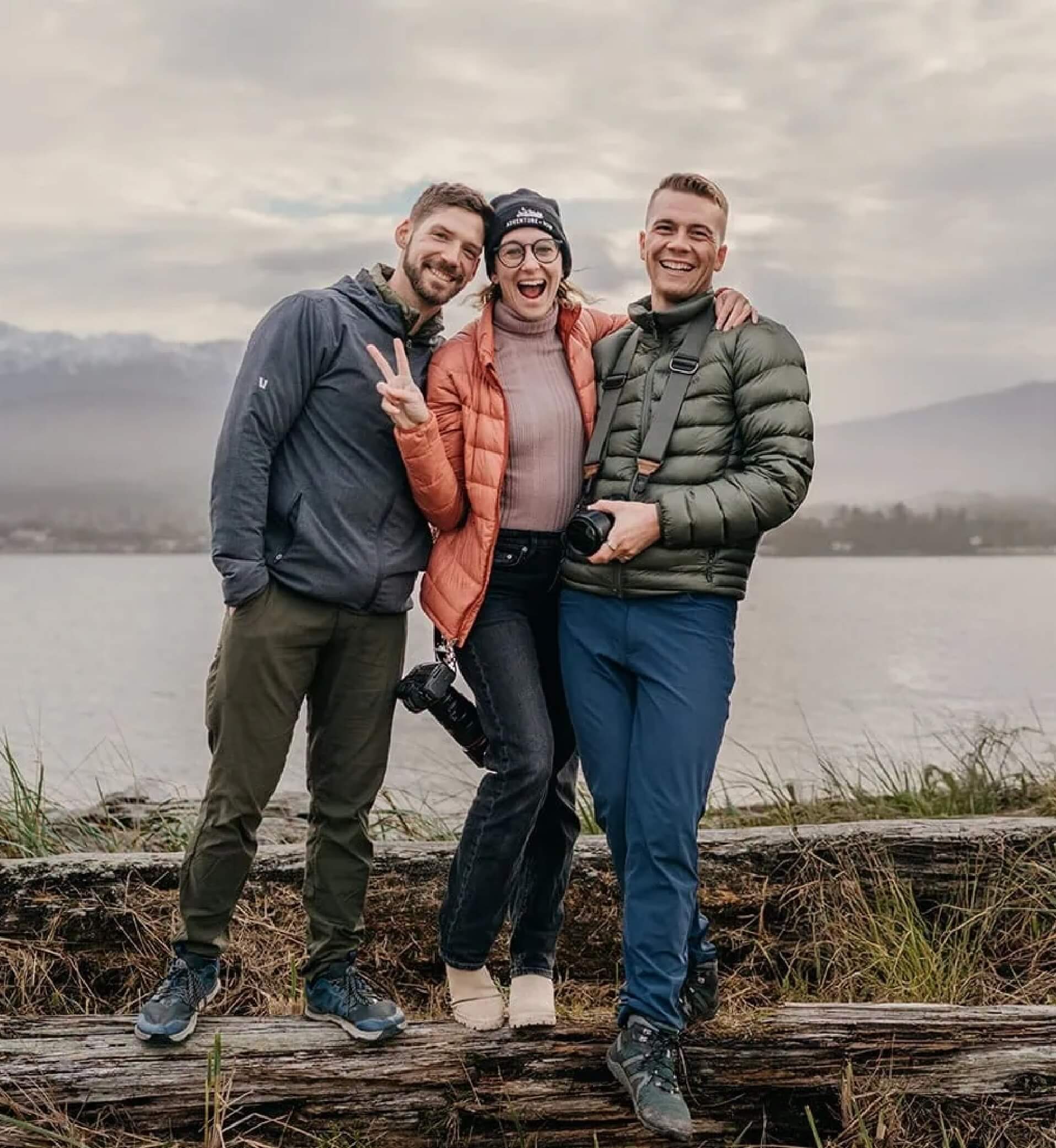
Meet your team!
Hi – it is Traci, Bill and Malachi
Over the years, we’ve helped hundreds of couples plan and document intentional, meaningful elopements in wild places.
Our blogs are where we share what we’ve learned—location guides, planning tips, real elopement stories, and advice to help you feel confident and inspired as you plan your own day.
Whether you’re just getting started or deep in the details, we’re here to support and inspire you. When you’re ready, reach out to book a free consult call and start planning your day with us.