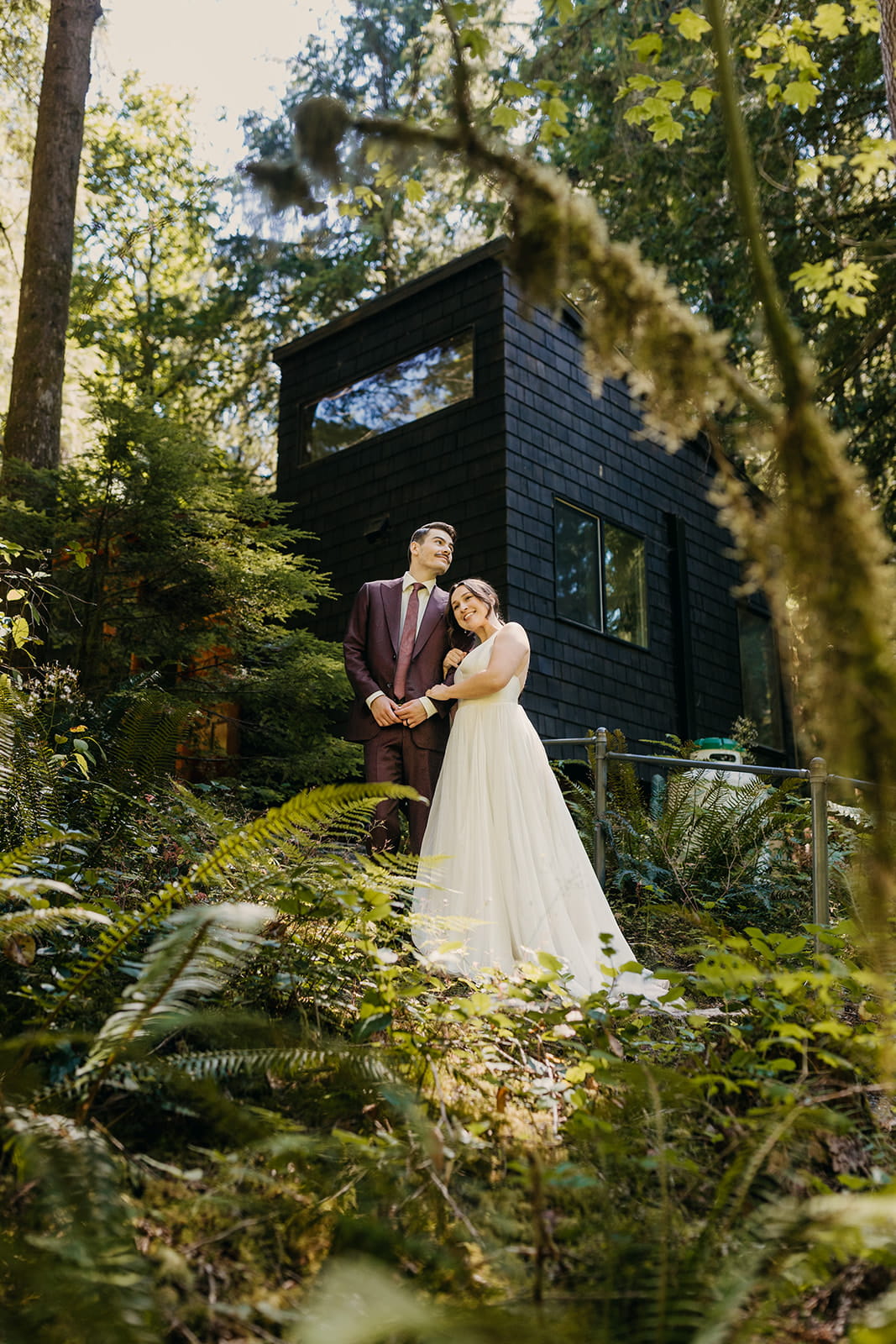
How to Tell Your Family You’re Eloping (With Example Phrasing for Announcing Your elopement)

For a lot of couples, deciding to elope isn’t actually the hardest part. It’s telling your loved ones.
We’ve had couples who were completely confident in their decision to elope, but felt nervous about having that conversation with their parents, siblings, or extended family. If that’s where you’re at, you’re definitely not alone. Even as elopement photographers, we felt some of those nerves when telling our own families we were going to elope, just us two!
This guide is about how to communicate your elopement plans in a way that feels grounded, respectful, and aligned with who you are, without losing yourself in the process of managing everyone else’s reaction.
And while we will be sharing a few helpful scripts of how to share the news of your elopement with loved ones, there is no perfect script here. Every family and every situation is different. But (and especially if you’re feeling nervous about announcing your news), there are ways to soften the conversation and make it a little easier for everyone involved.
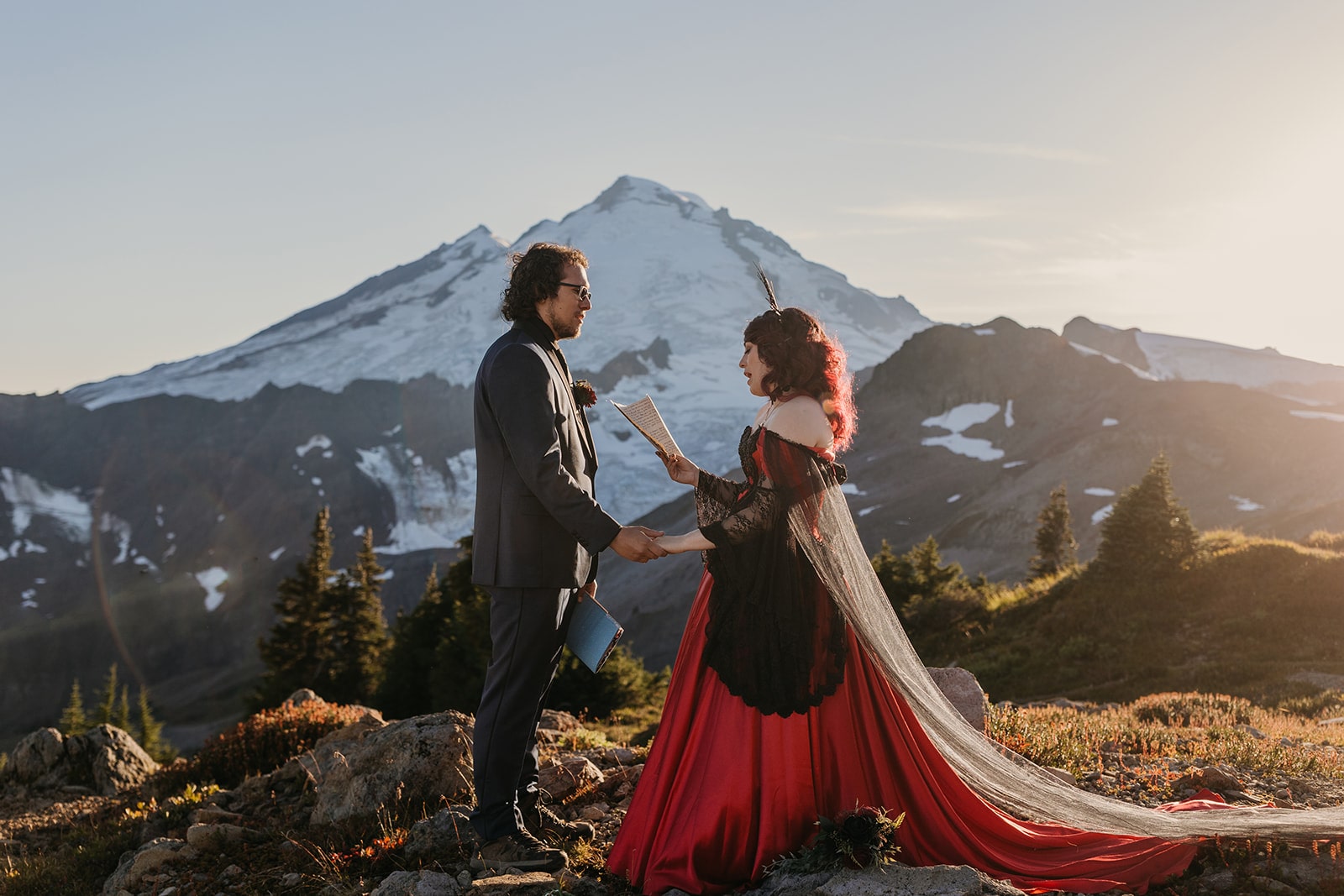
Why This Conversation is Important (And Also Why it Can Feel So Hard)
Weddings come with a lot of expectations. Sometimes they’re expectations you’ve carried for years, and sometimes they’re expectations other people have carried for years on your behalf.
When I (Traci) started doing elopement photography, neither of my parents understood the meaning of elopements. They said things like, “What are you doing? You’ll ruin your life.” They just didn’t have the language or understanding of what adventure elopements look like.
And a lot of our couples find themselves in the same position. Their parents may still associate elopements with something thoughtless, rather than an intentional, immersive experience in nature.
This is where having the conversation and explaining why and how you are eloping can go a long way.
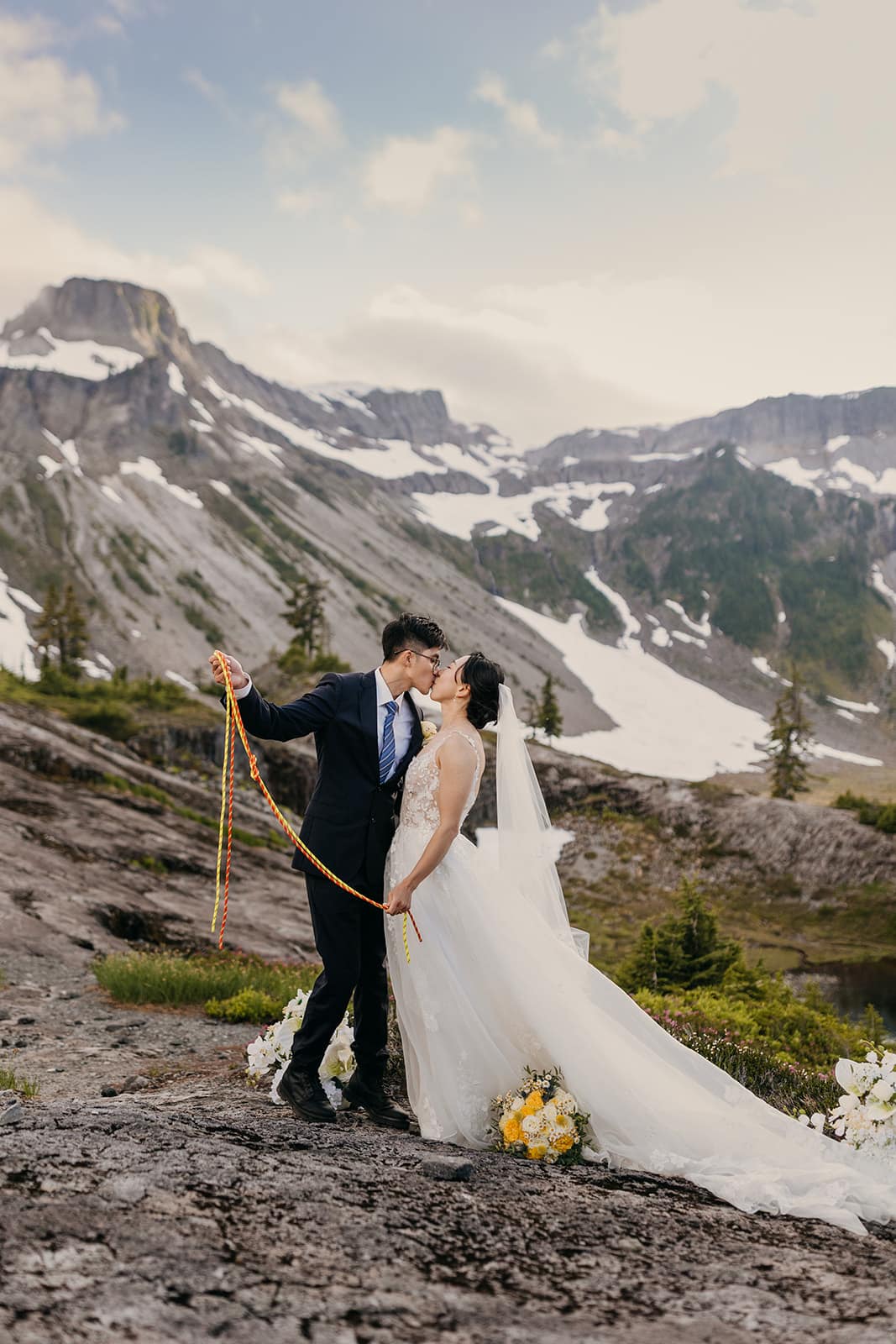
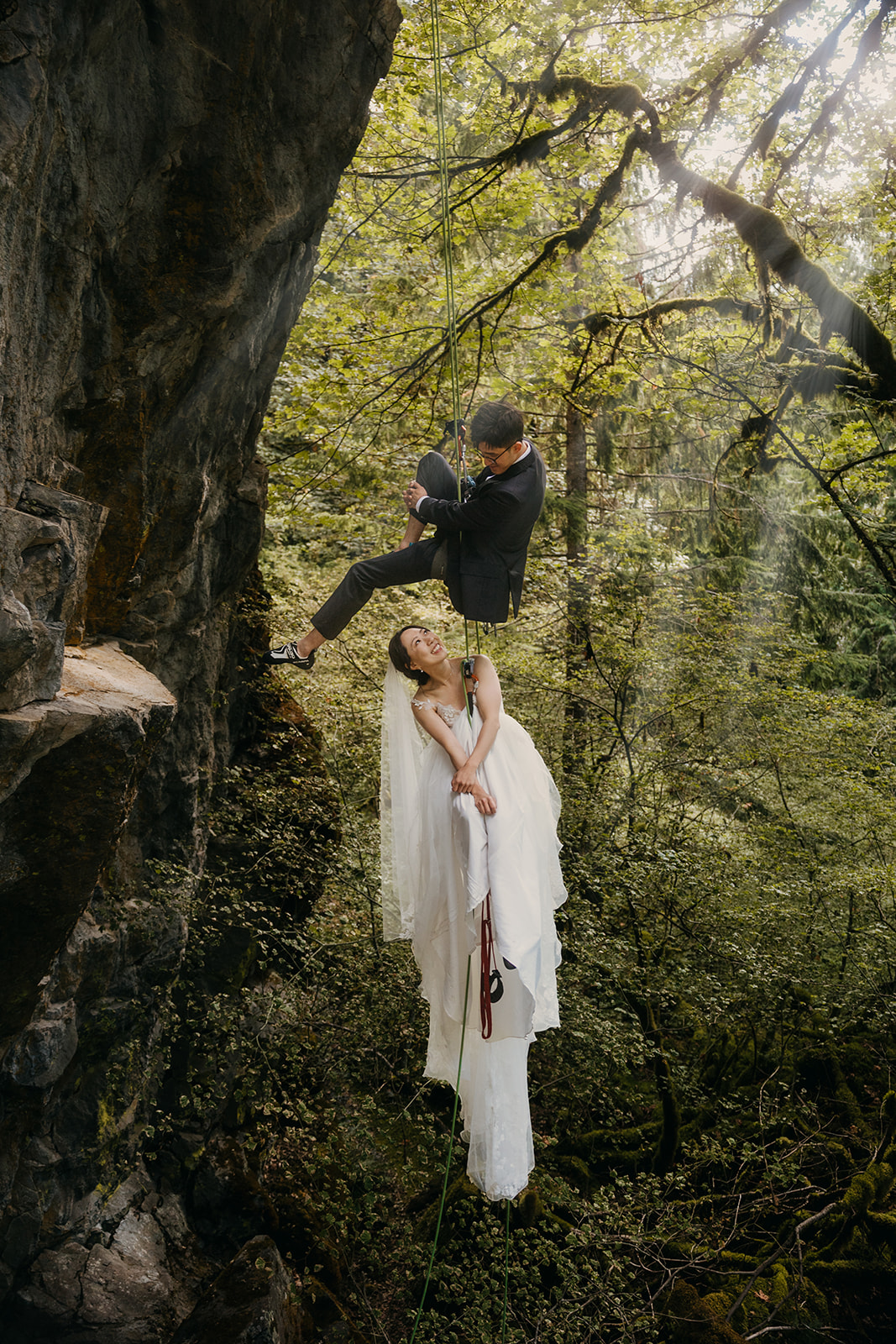
Common Fears Couples Have When Telling Family They’re Eloping
We’ve worked with a lot of couples over the years, and have a noticed a few recurring thoughts or fears:
- We’ll be seen as selfish
- Our families will feel excluded
- People will try to convince us to do something different
And yes, sometimes these fears do come to life. Someone might tell you that you’re being selfish, but the truth is, you’re not actually being selfish. You’re making a choice that aligns with who you are. The reality is, marriage is between two people at the end of the day, and no one has a given right to be present during the time together you make that commitment.

How to Tell Family You’re Eloping: 3 Tips for Sharing the News
Before You Tell Anyone, Get Clear on Why You’re Eloping
Before you tell your family you’re eloping, it can be helpful to take some time to understand and put words to why you two decided to elope. This way, you’re not trying to come up with something as you speak.
Be able to explain not just what you’re doing, but, most importantly, why it matters to you.
Don’t just say, “We’re eloping.” Be prepared to explain why you’re eloping, how you’re doing it, and what it means to you.
Because chances are, most people you’re telling don’t actually understand what an elopement looks like.
They might be imagining something very different than what you’ve planned—like you going to Vegas (which, to be clear, is a totally valid way to elope). But, if that’s not what you’re doing, this is where showing them can be more powerful than explaining.
Don’t, Just Tell, Show Them, if Possible
Share photos of where you’re going and examples from other couples who have eloped. Try to help your loved ones see what you see. Not because you need to convince them. Just because it can help them understand what you’re actually planning and how meaningful it can be through others’ past experiences.
Understand Your Family Dynamic
And just as importantly, when sharing the news of your elopement, consider your own family dynamic before you choose how and when to share. There is no universal approach that works for everyone and a variety of factors to consider like:
- How do they handle surprises?
- How do they handle change?
- How do they handle boundaries?
These are all things that will influence your timing and the way you handle the conversation.



When to Tell Your Family You’re Eloping
Just like with the “how”, there is no single correct timeline for this conversation. It depends on your relationship, your emotional bandwidth, and how much influence you want other people to have on your planning process.
In general, though, here are three options we’ve seen (and personally used).
Option 1: Tell them once your plans are finalized
Some couples choose to wait until their elopement is fully planned before announcing it to anyone.
This is the approach we took. We told our parents about two weeks before we eloped. We wanted to have everything fully planned and put together, so we could say, “This is what it is. We can’t change it.”
At that point, the conversation is more about sharing information, rather than inviting a discussion.
Benefits of this approach:
- Less room for outside influence
- Easier to answer questions
- More confidence in your decisions
Option 2: Tell them earlier
Others prefer to tell their family earlier and give them more time to take in the news.
This option can also work well for couples who want their loved ones to be more involved in the planning process and celebrations leading up to the elopement, like dress shopping, bridal showers, and so on.
Benefits of this approach:
- More emotional processing time
- Less surprise (you can even drop hints over a period of time)
- Better if you want to include them in your planning experience
Option 3: Tell them afterward
And sometimes, couples choose to share the news after the elopement itself. And we’ll be the first to say there is nothing wrong with this option.
I (Traci) had this idea to show up at each of our parents’ houses, dinner in hand, dressed in our wedding attire, and show them our photos, and tell them about our elopement day at Mt Rainier.
This option may not work for every couple, but it can be meaningful for some couples and even be a way to invite your family into the experience, even if they are not physically present for the ceremony itself.
Ultimately, the right time to tell your family you’re eloping is when you are ready. Don’t feel like the timing has to be perfect, but trust that you’ll know when it is right.
And remember, you’ve likely spent weeks or months thinking about this decision, but this may be the first time your family is hearing it. So, if they don’t react how you hope, it’s ok. Sometimes people need a little time to catch up.


3 Ways to Tell Your Family You’re Eloping
In most cases, the actual way you share the news is less important than your intention.
A few of the most common ways to share the news of your elopement:
- In Person
- FaceTime or on a phone call
- Write a letter
Most couples opt for an in-person or phone conversation. Taking the time to speak with your loved ones directly and share the news can go a long way in how it lands. It also helps as they can hear your tone and see or feel the emotion behind your decision.
We especially love the idea of taking your loved ones out to dinner or setting aside a special time to share the news. This might not be ideal for every family, but when it works, it’s a really beautiful way to have the conversation.
When we told our families the news of our elopement, we FaceTimed them together since we live on opposite coasts of the United States.
One way we do not recommend telling your family is through text message. Texts can often feel impersonal, and this is not a message that usually lands well in a text. But, of course, this again depends on your specific dynamic.
Real Scripts + Wording to Announce Your Elopement
Below, we’re sharing a few script ideas for how to announce your elopement to family. You don’t have to memorize them word for word. They’re simply starting points to guide you and help you stay grounded if emotions rise.
If they don’t understand what eloping means
“We are planning an adventure elopement. This isn’t about running away or doing something impulsive. It’s something we’ve thought a lot about and is deeply personal to us. We’d love to show you what that actually looks like and what we’re planning.”
If your parents expected to be invited
“We want to share something with you that’s really important to us. We’ve decided to elope. We know this might not be what you expected, but this is how we feel called to start our marriage. We’d love to tell you more about what we’re planning and why it feels right for us.”
If your family is processing disappointment or exclusion
“We understand this might feel different from what you imagined. That means a lot to us, and we don’t take it lightly. At the same time, this is the direction that feels most aligned for us as a couple.”
If siblings or other loved ones expected a role in the wedding
“We still really want you involved in meaningful ways. We were thinking [insert how you want them to be involved here – attire shopping, reading something they wrote during the ceremony, being part of a celebration afterward, etc.]. You’re still an important part of this. It’s just going to take a different shape than a traditional wedding role.”
If you’re looking for ways to give family a meaningful role without planning a traditional wedding, our guide to family and elopements walks through several creative ideas we’ve seen couples love.

What If Your Family Doesn’t React the Way You Hoped?
If you’re feeling nervous about telling your family you’re eloping, it can help to remember that there will probably be emotions involved. That’s normal. Sometimes people need time.
We’ve seen parents go from confusion or disappointment to complete excitement once they understood what their child was actually planning. A lot of people hear the word “elopement” and immediately picture something very different than the intentional experience you’ve spent months researching and dreaming about.
That’s why it can be helpful to explain not just what you’re doing, but why you’re doing it. Share photos. Show them examples. Help them understand what an elopement actually looks like.
At the same time, it’s important to remember that their reaction doesn’t have to determine your plans. You can have empathy for how someone feels without changing your vision.
We’ve found that when couples start making decisions based on managing other people’s emotions, things can shift quickly. A guest becomes two. Two becomes a ceremony. A ceremony becomes a compromise. And suddenly the day no longer feels like the experience you originally wanted.
That doesn’t mean including family is wrong. Many couples find meaningful ways to involve the people they love. But the key word is intentional.
Every family is different, which is why there’s no one-size-fits-all approach to these conversations. Some couples have deeply supportive families who simply need a little time to adjust. Others are navigating more complicated relationships where boundaries become especially important.
Whatever your situation looks like, try to stay connected to why you chose to elope in the first place. You can listen, empathize, and give people space to process without feeling responsible for changing your plans to make everyone happy.

A Parent’s Perspective on Their Child’s Elopement
We actually talked to a mother of one of our couples who described her experience like this:
“After a few years of my son dating his girlfriend, we knew she was ‘the one’ and were delighted when they became engaged. And then they told us they wanted to elope.
My vision of elopement was a cheesy wedding chapel in Las Vegas with Reverend Love officiating. But my son and his soon-to-be-wife quickly explained that what they wanted was an ‘Adventure Elopement.’
I soon discovered that what they had in mind was a very intimate, personal ceremony where they could demonstrate their commitment to one another, while enjoying hiking and the beautiful scenery of the Cascade Mountains in Washington State.
After exploring options, they decided to invite immediate family to join them for a weekend celebration after their hiking adventure.
If you find yourself wondering how to navigate your child’s elopement, here are my lessons learned:
✨ Don’t assume you understand what an “Elopement Wedding” is.
✨ Focus on the marriage, not the wedding.
✨ Ask your child how you can support them.
✨ Adjust your expectations.
✨ If you are contributing financially, don’t use your spending power as a method to dictate what they should and shouldn’t do for their wedding.
✨ Step back and let them plan THEIR wedding.Andy + Adrienne’s adventure elopement was more special than I had ever imagined a wedding could be.
After hiking up the trail under the stars, they shared their private vows overlooking the stunning blue waters of Colchuck Lake. They enjoyed coffee and did a little fly fishing before making the trek back down to the mountain lodge our two families had rented.
Our son’s wedding to his life-partner was personal, intentional, and reflected the things they both valued. A mom can’t ask for more than that, right?”
Just like Julie, many parents move through their own version of this. They may not always understand immediately, but with time, good communication, and boundaries, they can come around once they understand what you’re actually choosing.



Can You Still Include Family Without Sacrificing Your Vision?
Yes, absolutely. There are meaningful ways to include family in your experience without reshaping your elopement itself. Some of the ways our couples have done this:
- Handwritten letters you can read throughout the day
- A video call after you get ready so they can see your attire
- A celebration before or after
- Involving them in planning moments like shopping for attire or location scouting
But the decision to include family in your elopement is one that, just like your decision to elope, is best when made intentionally and something you genuinely want.
Sometimes couples later realize they created additional stress by trying to accommodate expectations that didn’t align with their original vision just to appease loved ones.
This is where being honest with yourself and sticking to your original vision matters most.
If you’re still deciding whether you want loved ones present on your elopement day, we’ve put together a full guide on how to include family in an elopement, including ideas for balancing privacy, connection, and the experience you two actually want.

FAQs About How to Tell Family You’re Eloping
Do I have to tell my family I’m eloping?
There is no rule that says you must. But most couples choose to, in some form, based on their relationship.
Can I include family later?
Yes. Many couples plan a separate celebration or gathering after their elopement. Read this post if you want to learn more about what that can look like.
How do I handle extended family opinions?
Keep communication simple, consistent, and not overly detailed. You don’t need to open every conversation for debate. Lots of couples will send a “We are Eloping” announcement over a save the date, or post elopement, send a card with one of their photos announcing they already got married.
What should I say if I’m overwhelmed?
“You don’t need to agree with this, but I do need you to understand that this is what we’ve chosen.”
Closing Thoughts
There is no perfect way to have this conversation. The best you can do is be thoughtful in your approach and stick to your boundaries.
Some people may immediately understand why you’re choosing to elope. Others may need a little more time. Either way, this is your marriage and your wedding.
The people who love you most may not fully understand your decision right away, but that doesn’t mean you’ve made the wrong one. It just reflects how layered relationships and expectations can be.
If you’re in the middle of these conversations right now, you don’t have to navigate them alone. We’ve walked through this with so many couples, and we’re always here to help you find a way forward that feels true to you two.
Looking for an Elopement Photographer?

Hey there, we’re Traci and Bill (and our dog Tucker and cat Indy).
We built Adventure and Vow around a simple idea—helping couples create elopement days that feel intentional, connected, and deeply true to who they are, from the first conversation all the way through the final celebration.
A big part of that work isn’t just choosing locations or planning timelines. It’s also helping couples navigate the more human side of eloping—like how to share their decision with the people they love.
We’ve walked alongside hundreds of couples through those conversations and have seen firsthand that there isn’t one right way to do it.
But there is a way to do it with honesty and care for your own vision.
We hope this guide has helped bring a little more grounding to those conversations, and reminded you that you’re not alone in figuring it out.

Blog post written by Sonder Studio

Meet your team!
Hi – it is Traci, Bill and Malachi
Over the years, we’ve helped hundreds of couples plan and document intentional, meaningful elopements in wild places.
Our blogs are where we share what we’ve learned—location guides, planning tips, real elopement stories, and advice to help you feel confident and inspired as you plan your own day.
Whether you’re just getting started or deep in the details, we’re here to support and inspire you. When you’re ready, reach out to book a free consult call and start planning your day with us.